



Health care

We provide affordable and personalized care

How can we help?

Helpful links

Financial

Accounts to help you save and pay for health care expenses

How can we help?

Helpful links

  • Resources

    Find contribution limits, savings tools, calculators and eligible expenses

  • Account support

    Find contact information and frequently asked questions

Tax season resources

Get ready for HSA tax season

If you used an HSA this year, the HSA Tax Center offers general information about contributions, eligible expenses and commonly used tax forms — all in one place.

Pharmacy

We make it easy to get medications you need, when and where you need them

How can we help?

Helpful links

  • Optum Rx

    For people with pharmacy insurance benefits through Optum Rx

  • Track orders

    Track your home delivery and specialty order

  • Pharmacy support

    Find contact information and answers to frequently asked questions

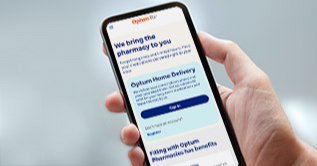
Mobile app

Optum Rx on the go

Request refills, track order status, manage billing information and much more.

Download on the App StoreGet it on Google Play

How clinical decision support tools can help redefine patient care

June 20, 2025 | 4-minute read

Health care continues to shift toward a value-based care model, where providers focus on preventive care, quality and outcomes. Notably, CMS aims to have all Medicare fee-for-service beneficiaries and the vast majority of Medicaid beneficiaries in value-based care relationships by 2030.

In a recently published article, Dr. McKinley Glover IV, vice president of clinical decision support at Optum Insight, shares the importance of technology in this shift. “At Optum, we’re enabling the transformation by equipping providers with advanced clinical decision support tools (CDS) to help them deliver the best possible care,” he writes.

Dr. Glover outlines three approaches to help ensure more time is dedicated to  patients and improving the health care experience:

Artificial intelligence for operations

AI “should inform, not replace, clinical decision-making, patient autonomy and the provider-patient relationships,” Dr. Glover writes. “As AI becomes more integral in health care, it has the ability to drive improvements by delivering information to clinicians to support diagnosis and treatment recommendations.”

Emphasizing value-based care and payer-provider collaboration

“As we shift from fee-for-service to value-based care models, we need to build a system with better collaboration between payers and providers,” Dr. Glover writes. “By working together, we can better align on incentives and share data to support development of the next generation of advanced clinical decision support tools. … Ultimately, these advanced CDS tools provide a more holistic view of the patient’s health care journey, enabling the development of optimized treatment plans while reducing administrative burden.”

Read Dr. Glover's full article

Related news

Supporting better health through sustainable weight management

News story

Supporting better health through sustainable weight management 

Through Weight Engage, Optum Rx is helping people build healthier habits while supporting better outcomes and greater affordability for employers and patients alike.

April 30, 2026

How Dr. Calvin Tsao Is Advancing Value-Based Care in the Home

News story

Delivering the right care, every time

As a medical director with Optum Home & Community Care Delivery, learn how he supports teams across the country focused on delivering better outcomes.

April 20, 2026